
Electric cars abroad: charging, parking, subsidies and more
What is the current situation regarding charging stations for electric cars in other European countries? Do electric car drivers have certain privileges such as exemption from tolls? Are there any support programmes for electric mobility? This article answers all of your questions and others on electric car policy in European countries.
Electric Vehicles in Europe – charging, subsidies and more
To ensure that your car doesn’t run low on power while travelling, thorough preparation is required. If you are travelling with an electric car, you should find out in advance about the charging options on the route to your destination as well as charging options at your destination. It’s also important to have multiple different charging cards in your luggage. The ADAC provides an overview of charging stations in Europe (in German).
Advice: If you want to pay less, you should use regional providers. Maps and apps from roaming partners abroad are also a must.
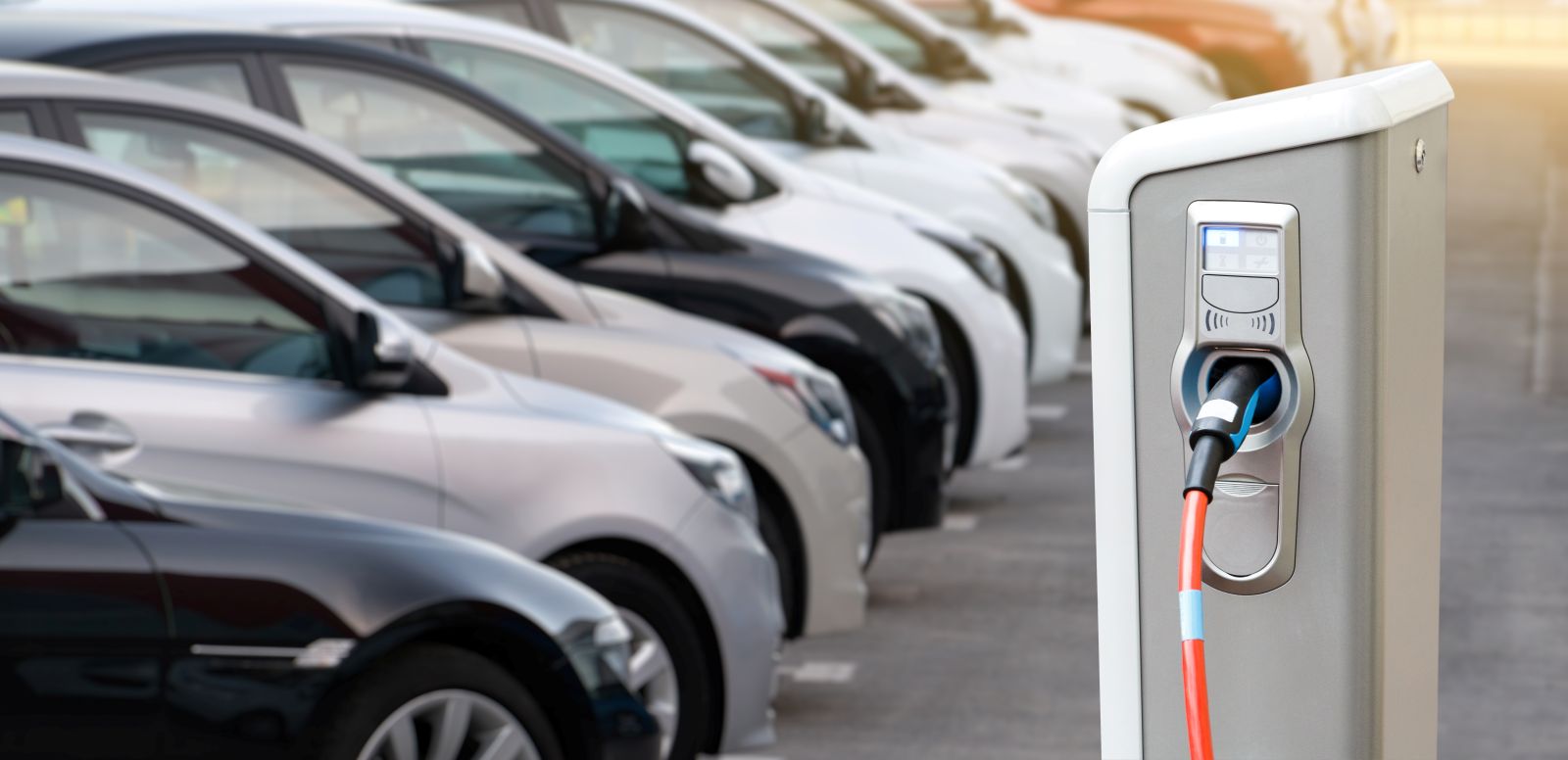
Benefits of electric cars in Europe
In some European countries, electric car drivers can benefit from a number of advantages, such as free parking in cities or free travel in low emission zones. Tourists can also benefit from this. However, it is often necessary to apply for an exemption from the local authorities or to register the car in the respective country.
Registration or re-registration of the vehicle abroad is usually required for foreign subsidies and tax breaks for electric cars. This is therefore particularly important for people with a foreign residence, holiday home or when moving abroad.
Charging
There is a large network of public charging stations in Belgium. They are the most plentiful in the north. Fast charging is easily possible along the motorways and dual carriageways.
The largest networks are allego, Lidl and Tesla Destination Charging.
Parking
The major car park operators in Belgium offer the option of looking for car parks with charging stations on their websites (Interparking, Q-Park, APCOA).
In Belgium, there are also charging stations in supermarket car parks, but these are often not free of charge. To pay, you need to use an app to activate the charging station.
Low emission zones
Even though e-cars do not require a day pass, you must register your car in advance for the environmental zones in Antwerp, Brussels and Ghent. If you drive into the zone without registering in advance, you could face a fine of €150 to €350.
Subsidy and tax
There is no standardised purchase premium in Belgium. Eelectric Vehicles are subsidised differently depending on the region. In Flanders, for example, there is a bonus of around €5,000 for the purchase of an electric car with a net price of €40,000. This subsidy is valid until 2027 but will be reduced to €4,000 in 2025 and €3,000 in 2026.
In Flanders, there is no registration tax for e-cars and no annual vehicle tax. In Brussels and Wallonia, the registration fee for e-cars is at least €61.50 and only €74.29 has to be paid for the annual vehicle tax.
Charging
The network of public charging stations in Bulgaria is not very dense. However, there are many fast-charging stations. Make sure you always have enough power; if there are any problems with a charging station, you can always use another one.
The largest providers are eldrive and Fines.
Parking
In the cities of Sofia, Plovdiv and Burgas, you can park an electric car free of charge in certain zones. However, you need a sticker. The correct application must be submitted to the appropriate authority.
Rental car
In Sofia and Plovdiv, for example, you can hire an e-vehicle from the SPARK car hire service at good prices. Charging at eldrive charging stations is included in the rental price and parking is free in many zones.
Subsidy and tax
There is no purchase premium for e-vehicles in Bulgaria. However, e-cars are exempt from motor vehicle tax.
Charging
You can drive in Germany with an electric car without any worries. Charging stations are mainly located along the main transport routes and around larger cities. The network is somewhat less dense in rural areas. In addition to a nationwide network of charging stations, there is also a large number of fast-charging stations.
The largest networks are EnBW, E.On and Tesla.
Parking
The “Elektromobilitätsgesetz” (EmoG – Electric Mobility Act) includes multiple benefits for e-vehicles in Germany. Local authorities are responsible for enforcement. Parking facilities have been set up at public charging stations. The ADAC (in German) provides an overview of parking at public e-charging stations. Customers can also charge their electric cars in the car parks of some shops and supermarkets (for a fee).
Subsidy and tax
The environmental bonus as a government subsidy for electric cars was discontinued in 2023. This subsidy no longer exists. However, electric cars are exempt from vehicle tax in Germany until 31 December 2030. This applies to new or used electric cars registered before 31 December 2025. This tax exemption is valid for a maximum of ten years from the date of first registration. After that, electric car drivers must pay a 50 per cent reduction in vehicle tax.
Other issues
If you stop on the motorway or dual carriageway with a flat battery, you could face a fine of up to €70.
Charging
Denmark has a well-developed network of public charging stations, especially in the east along the main transport routes and around larger cities. This also includes many fast charging stations. Some ferries, e.g. to Bornholm, have charging stations. But there are usually only a few spots, so you should arrive well before departure.
The largest operators are E.ON DK and Clever.
Parking
In some cities, e.g. Copenhagen, parking in public car parks is free of charge for electric vehicles. This also applies to tourists. Look out for the signs (P + plug symbol). This privilege does not apply in multi-storey car parks.
Time limits also apply to electric vehicles.
Other benefits
In some municipalities, you can drive your electric car in the bus lane. If this is possible, it is marked with a green symbol on the road.
Subsidy and tax
There is no purchase premium for e-cars in Denmark. But there are tax breaks.
Charging
Public charging stations are available everywhere in Estonia. Fast charging is also possible.
The largest operator of charging stations is Enefit VOLT.
Parking
In some municipalities, electric cars can park for free in designated car parks. For example, parking is free for electric cars in the city centre of Tallinn. However, you must first register with the traffic authority.
Subsidy and tax
Since 2024 the Estonian government no longer subsidises the purchase of electric vehicles. However, e-car drivers benefit from a lower registration tax and an exemption from vehicle tax.
Charging
There are enough charging stations in Finland, even for fast charging. However, the density decreases towards the north. Make sure you always have enough charge; if there are problems with a charging station, you can always use another one.
The largest charging networks are Fortum Finland and ABC Lataus. Charging cards from Fortum Norway and Fortum Sweden are also accepted in Finland.
Parking
In Helsinki, e-car drivers receive a 50% discount on paid parking spaces. To take advantage of the discount, the car park must be paid for via a mobile app. You must first register your e-vehicle with the relevant authority by email (more information on the City of Helsinki website). Residency in Finland is not required.
Subsidy and tax
There is no flat-rate premium for the purchase of an electric car.
In Finland, e-cars are eligible for vehicle tax concessions.
Charging
In France, there is a well-developed network of charging stations. Fast charging is possible throughout the country. The largest providers are Tesla Destination Charging, Lidl and Reveo.
Free charging stations can be found in some supermarket car parks. You will need an app to activate them.
As electricity is cheaper in France than in Germany, ad-hoc charging can also be worthwhile.
Parking
If you charge your electric vehicle in the designated parking spaces, you can park for free for the duration of charging (e.g. 30 minutes). Signs and ground markings indicate the parking areas, for example in public spaces or at supermarkets.
Otherwise, there is a green “disque vert” sticker for residents of France, which allows the electric car to be parked free of charge for two hours in paid parking spaces. The sticker can be obtained from the city or municipality upon presentation of the vehicle licence.
In Paris, a virtual low-emission card called “Véhicule de basse émission” is required. This must be applied for in advance from the city. Without this card there is a fine of €50.
Tolls
In France, efforts are being made to reduce or possibly abolish the toll for electric cars. Currently, there are only temporary offers from individual toll operators. Prerequisite: e-car drivers must use the electronic toll and the e-vehicle must be registered in France.
Subsidy
In France, there were two types of financial assistance: the ‘bonus écologique’ (environmental bonus) and the ‘prime à la conversion’ (conversion bonus). These were discontinued in 2025. However, following their abolition, there is now a new bonus for purchasing electric cars, known as the ‘Coup de Pouce’. This subsidy is reserved for private individuals and amounts to €3,180 or €4,240, depending on the household’s reference taxable income. There is also financial assistance with energy-saving certificates for the purchase of an electric car, for example.
In addition, there are regional premiums and subsidy programmes. Some of these can be combined with the purchase premium.
Further information can be found at service-public.fr and cec-zev.eu.
Other issues
If you stop on the motorway with your electric car because the battery is flat, you can be fined up to €150 for stopping without authorisation.
Some cities in France have low emission zones, e.g. Paris. Here, electric car drivers require a category 0 (green) vignette.
Charging
In Greece, the amount of public charging stations is not plentiful. The charging stations are mainly located in the south around larger cities (most of them in Athens) and along the main transport routes. Fast charging is only possible in very few places. Make sure you always have enough power; if there are problems with a charging point, you can still drive to the next one.
The largest networks are DeiBlue and nrg incharge.
Parking
In the centre of Athens and other cities, electric car drivers can park free of charge in paid parking spaces.
Unfortunately, this privilege does not apply to tourists. This is because a so-called TaxisNet code (in Greek) is required, which can be used to request a vignette from the Greek government. This is possible via the website electric-vehicles.services.gov.gr (in Greek).
Subsidy and tax
The Greek government supports the purchase of electric cars with a maximum of €8,000 (and an additional bonus of €1,000 if it is exchanged for a car that is more than 10 years older or the driver is under 29 years old. In addition, electric cars are exempt from vehicle and registration tax.
Other issues
For safety reasons, electric and hybrid vehicles are only allowed to board ferries operated by Greek shipping companies with a maximum battery charge of 40 %.
In Athens, the restrictions to curb air pollution do not apply to electric vehicles, e.g. driving bans during smog alerts.
Charging
There are plenty of public charging stations in the UK. England is the best supplied with charging stations. In Scotland, Wales and Northern Ireland, there are few charging stations. Fast charging is guaranteed along the motorways and dual carriageways.
Major providers include ubitricity, BP Pulse and ESB (Northern Ireland only).
Free charging is sometimes possible in car parks at shopping centres, supermarkets or hotels. Here too, an app is required for activation.
Parking
In London (and other cities), you can often park for free at public charging bays while you charge your car. Look out for the signs!
UK residents can apply for discounted or free parking permits for electric vehicles.
In some areas, there are also discounted parking spaces for electric cars for tourists. Information can be found on the websites of the respective cities and municipalities.
Congestion charge and low emission zone
There is no environmental charge for the London Ultra Low Emission Zone. However, the e-car must be registered online before travelling through the zone, otherwise heavy fines may be imposed.
E-cars are also exempt from the London congestion charge. However, here too, the vehicle must be registered in advance.
Subsidy and tax
There is no purchase premium for electric cars in the UK. Electric cars are exempted from vehicle tax.
Charging
There are fewer public charging stations in Ireland when compared to other European countries. However, the government is planning to expand the charging network across the country.
The largest provider is ESB (also in Northern Ireland).
Parking
In some municipalities, e-car drivers can park for free in car parks with e-charging stations while charging. If you use public charging points in Dublin, you will have to pay extra for parking
Subsidy and tax
In Ireland, the purchase of a new electric car is subsidised with a bonus of up to €3,500. Vehicles with a list price of €14,000 to €60,000 are eligible.
Electric Vehicles (price up to €40,000) receive a reduction of up to €5,000 in registration tax. The lowest rate of motor vehicle tax applies (€120).
Charging
In Iceland, the network of public charging stations is still being developed. On the coast along the ring road there are already charging points at regular intervals, also for fast charging.
Make sure you always have enough power. This way, you can easily access another charging point if there are any problems with a charging station.
The largest provider in the country is Orka náttúrunnar.
Parking
Free parking at public charging points is not possible in all parts of Iceland.
Subsidy and tax
Since 2024, buyers of a new EVin the M1 category (passenger car) can apply for a subsidy of up to ISK 900,000. E-car drivers must pay a road tax: ISK 6 per kilometre driven.
Charging
There are sufficient public charging stations in Italy, including fast charging points. The density of the network decreases towards the south.
The largest charging network is Enel X Way. The Enel X Way map provides an overview of the charging station locations.
Advice: There are some free charging points in the north of Italy, e.g. along the Brenner Pass. Customers can also charge their cars for free at some supermarket car parks.
Parking
In some cities, you can park your electric car free of charge, e.g. in Rome in the car parks marked in blue. In order to take advantage of this benefit, you usually have to send the licence plate number (or a copy of the vehicle registration document) to the relevant authority by email in advance. Otherwise you risk a fine. Stickers are not issued.
Find out about the regulations at your holiday destination.
Restricted traffic zones (ZTL)
With an electric car, you can drive freely in many traffic-calmed zones in Italy (Zona a Traffico Limitato). In some cities, this also applies to hybrid cars.
The prerequisite is that the e-vehicle is registered. This means that the licence plate number or a copy of the vehicle registration certificate must be sent to the responsible office at the city or municipality in advance.
If you have forgotten to register your e-vehicle and receive a fine, you may be able to successfully make a complaint.
Depending on how the respective municipality has regulated its ZTL, the exemption for e-cars may be taken into account retrospectively and the fine may be cancelled.
Congestion Charge
Electric vehicles are exempt from the congestion charge in Milan, Palermo and Bologna.
Subsidy and tax
The purchase of electric and hybrid cars is subsidised in Italy. The premiums are between €2,000 and €7,500 and are based on personal income. The maximum amount requires the old vehicle to be scrapped.
EVs are exempt from motor vehicle tax for 5 years. After that, there is a 75% reduction.
Charging
Public charging stations are not yet widespread in Croatia. The north of the country in particular, along the main transport routes, is well covered with charging points, as is the area around larger cities. Make sure you always have enough power. If there are problems with a charging station, you can always drive to another one.
It is advisable to register with a local provider (e.g. Hrvatski Telekom or elen). You can do this from home before you start your journey.
Subsidy and tax
In Croatia, there are always subsidy programmes for the purchase of e-vehicles. In 2024, Croatian citizens can apply for a maximum premium of €9,000 for a new EV.
Charging
Public charging stations are available everywhere in Latvia. Fast charging is also possible. The largest operator is CSDD.
Parking
Parking for electric cars is free of charge in Riga and Liepāja.
Other issues
E-cars are allowed to use the bus lane.
In the busy season, there is no charge for electric cars to enter the resort of Jurmala.
Subsidy and tax
Electric vehicles are exempt from vehicle tax. The first registration of an electric car is free of charge, as is the licence plate.
Charging
Public charging stations are available throughout Lithuania. Fast charging is also possible.
The largest providers are Ignitis ON (with charging points mainly in Vilnius) and Elinta Charge.
Parking
In some cities, e.g. Vilnius or Kaunas, you can park your electric car free of charge in paid car parks and drive in the bus lane.
Subsidy and tax
In Lithuania, electric vehicles are exempt from motor vehicle tax. There is also a purchase premium of €5,000 for new electric cars. If you buy a used electric car, you get €2,500. Anyone who scraps their old vehicle receives an additional €1000.
Charging
Luxembourg has a well-developed network of charging points, mainly in the south. In the north, the charging network is being expanded further. The largest operator is Chargy.
Parking
In some cities, such as Luxembourg City, you usually have to pay extra for parking while charging at public charging stations. In some supermarket car parks, charging is free for customers.
Subsidy
For all electric cars, the minimum rate of motor vehicle tax in Luxembourg is €30. In Luxembourg, buyers of electric cars receive a bonus of up to €8,000.
Other issues
If you leave your electric car on the road with an empty battery, you could face a fine of €74.
Charging
There are plenty of public charging stations in Malta. Please note: There are only type 2 plugs.
The largest network is ‘innogy eRoaming’.
Registration via the ‘Charge my Ride’ app makes the payment process easier.
Note: Parking spaces are scarce in Malta. Public e-charging bays are often misused as car parks by combustion engine vehicles.
Parking
EVs can park free of charge in some areas. Look out for the signs.
Subsidy and tax
When buying an electric car, Maltese residents receive a subsidy of up to €11,000. There is a further bonus of €1,000 for scrapping an old combustion engine car.
For electric cars, you pay the minimum rate for registration and vehicle tax in Malta.
Charging
There is a very dense network of public charging stations in the Netherlands. Fast charging is easily possible along the main transport routes.
Charging points have also been set up in many car parks.
The largest charging network is Shell Recharge.
Parking
When charging at public charging points, you usually also have to pay a parking fee. In some smaller towns you do not have to pay a parking ticket while charging.
Subsidy and tax
The purchase of a new e-car is subsidised with up to €2,950 for vehicles under €45,000. A maximum of €2,000 is available for used vehicles.
In the Netherlands, no road tax has to be paid for e-vehicles. Starting in 2025, electric vehicles will also be subject to a motor vehicle tax of 25%.
Charging
Norway has a dense and reliable network with numerous fast-charging stations. The south in particular is well supplied with charging stations, but the network is being expanded further in the north. Electric cars are so common in Norway that you can expect waiting times at charging points.
The largest providers are Fortum Norway and Mer Norway.
Charging cards from Fortum Finland and Fortum Sweden are also accepted in Norway.
Parking
In some cities, parking for electric vehicles in public car parks is discounted. This also applies to tourists. Private car parks and multi-storey car parks, on the other hand, are subject to charges.
So pay attention to the information on the car park signs, the information on the charges and the time restrictions.
Other benefits
A 50% discount is granted for all-electric vehicles when travelling by ferry. To receive this discount, you must inform the ticket seller that you are travelling by electric car. Please note: Some shipping companies prohibit the carriage of electric, hybrid or hydrogen cars. Find out about the regulations.
On toll motorways, you pay a maximum of 70% of the toll fee for your electric car; sometimes the toll roads are free of charge.
It is also possible to use the bus or taxi lane. However, there may be restrictions imposed by the respective cities and local authorities.
Find out more about the benefits for e-car drivers at elbil.no
Subsidy
A small purchase/import tax will be payable on the purchase of an electric car from 2023. Before then, they were tax-free. A VAT of 25% will be charged if the purchase price is over NOK 500,000.
Since 2023, the full vehicle tax must be paid for electric cars.
Charging
You can drive through Austria in an electric car without any worries. In addition to a nationwide network of charging points, there are also a large number of fast-charging stations.
The largest networks include TANKE WienEnergie and EVN.
There are free charging facilities in the car parks of various supermarkets and retailers. Please note that you will need special apps or charging cards here.
Parking
While the electric vehicle is charging, no parking fee has to be paid at public e-charging stations, e.g. in Vienna.
In many cities, EVs can park free of charge in short-term parking zones. E-cars with an Austrian licence plate or residents with a “park pickerl“ benefit from this. A parking disc must also be used.
Other benefits
Electric vehicles are exempt from the environmental speed limits on motorways. Instead of 100 km/h, 130 km/h is permitted, e.g. on the Inntal motorway A12 and the Westautobahn A1. This also applies to foreign drivers of electric cars, but not to hybrid vehicles. The vehicle must have a licence plate with an “E”.
Subsidy and tax
The purchase of a new e-vehicle in Austria is subsidised with up to €5,000. A subsidy of up to €1,800 is possible for charging stations.
There are also tax benefits. EVs are not subject to a standard consumption tax (NoVA), i.e. the one-off tax payable when purchasing or registering the electric vehicle for the first time is not applicable. The motor-related insurance tax, which is collected by the insurance company, also does not apply to electric cars. Further information can be found on the website of the Austrian Federal Ministry of Finance.
Charging
The network of public charging stations in Poland is relatively small, especially in rural areas. The West Pomerania region on the German border is best supplied with charging points. However, a third of the charging points are fast chargers.
Make sure you always have enough power charged; if there are problems with a charging point, you can always drive to another one.
The largest charging networks in Poland are Orlen Charge and Greenway.
Parking
You can park free of charge in public charging bays while charging.
The paid public parking zones in cities and municipalities are also free for electric vehicles.
Commercial operators, on the other hand, charge for parking with an electric car.
Other benefits
In cities, you are allowed to use the bus lane with your electric car.
In the centre of Wroclaw and Krakow, EVs are also allowed to drive in some car-free streets, e.g. pedestrian zones. Pay attention to the signs!
Subsidy
The purchase of new electric vehicles is subsidised in Poland. Private individuals receive a subsidy of up to PLN 18,750 (≈ EUR 3,980), families with three or more children up to PLN 27,000 (≈ €5,726). Other beneficiaries (companies, legal entities, etc.) can expect a purchase premium of up to PLN 70,000 (≈ €14,865).
Electric cars are also exempt from registration tax.
Charging
In Portugal, charging points can be found at regular intervals along the main transport routes. Most are located in the south in the Lisbon region. In contrast, there are fewer charging points in the countryside and in the cities.
Plan a sufficient buffer so that you still have enough power to reach an alternative charging point in the event of problems.
The largest operators are MOBI.E and Tesla Destination Charging.
Parking
In Portugal, free parking is available for electric cars in certain areas. Pay attention to road markings and signposting.
In Lisbon, you can buy a green parking disc for 12 euros, which allows you to park your electric car in any public car park free of charge and without time limit for one year.
Subsidy and tax
The purchase of a purely electric car is subsidised with up to €4,000.
Electric cars are exempt from registration and vehicle tax in Portugal.
Charging
In Romania, the network of public charging stations is not yet very dense. Make sure you always have enough power; if there are problems with a charging station, you can always use another one.
The largest operator is Renovatio e-charge.
Parking
In Bucharest, you can park free of charge in public car parks if you have registered your hybrid and electric vehicle beforehand.
Subsidy and tax
There is a bonus of between €4,500 and €9,000 for the purchase of a new electric car in Romania. The maximum subsidy amount is available to anyone who takes their old vehicle out of circulation (emission standard ‘Euro 3’ and worse).
Owners of electric vehicles do not pay road tax. Anyone who scraps their old combustion engine and buys an electric car can receive a subsidy of between €2,600 and €6,250.
Charging
The network of public charging stations in Sweden is very well developed. However, there are fewer charging points in the north than in the south. Fast chargers can be found throughout the country.
The largest networks in Sweden are Vattenfall and Mer Sweden.
Charging cards from Fortum Norway and Fortum Finland are also accepted in many places.
Parking
In some areas in Sweden, electric cars can park for free.
Otherwise, there are car parks and multi-storey car parks with charging points for e-car drivers in various cities.
In Stockholm, for example, you pay for parking and can charge for free. Find out more at stockholmparkering.se.
Congestion charge and environmental zones
A congestion charge is payable in Stockholm and Gothenburg. This also applies to electric vehicles! Foreign vehicle owners should register in advance via EPASS24 in order to receive an insight and notifications about the toll charges.
In Sweden, e-cars are allowed to drive in the environmental zones of municipalities without restriction.
Subsidy and tax
The government subsidy with the climate bonus was stopped in 2022. However, a scrappage premium is to be introduced from the second half of 2024.
Low-emission cars pay a lower vehicle tax.
Charging
You can drive through Switzerland in an electric car without any worries. In addition to a nationwide network of charging points, a large number of fast-charging stations are also available.
The largest provider in Switzerland is swisscharge.
Parking
There are charging points for electric cars in many car parks in Switzerland. You usually have to pay for both parking and charging. The same usually applies to public outdoor charging bays. In some supermarket car parks, charging is free for customers.
Subsidy and tax
Switzerland does not have a general purchase premium for EVs. However, there are various subsidy programmes in the individual cantons and municipalities.
Since 2024, electric car drivers are no longer exempt from motor vehicle tax; the normal tax rate of 4% applies.
Charging
In Slovakia, public charging stations are mainly located in the west of the country. Outside of Bratislava, however, there are only a few fast chargers.
The largest providers are ZSE and greenway.
Parking
You can only park for free in public car parks for as long as you are charging your vehicle. After that, parking fees will be charged.
In some cities, there are moderate parking fees for electric cars. Some supermarkets also offer customers free charging facilities.
Subsidy and tax
There is no state-subsidised purchase premium for e-cars in Slovakia. However, owners of an electric car enjoy tax benefits: Exemption from vehicle tax and a maximum of €33 for registering a new e-car.
Charging
Charging points are available throughout Slovenia, especially in the centre of the country. However, there are only a few fast chargers.
One of the leading providers of charging services is Elektro Ljubljana.
Parking
You do not have to pay for parking at public charging points while charging.
Subsidy and tax
Slovenia grants subsidies for the purchase of an electric car. The maximum amount is €6,500.
Owners of electric cars pay a reduced registration fee.
Charging
The density of public charging stations varies greatly depending on the region in Spain. There are many charging points, especially in the north along the main transport routes and around larger cities. For longer journeys across the country, you should plan a sufficient buffer so that you still have enough power to reach an alternative charging point in the event of problems.
The largest networks are Endesa, Tesla Destination Charging and Iberdrola.
Parking
In some cities, electric cars are exempt from parking charges.
In Barcelona, for example, in the blue parking zones. To make use of this advantage, you must first register at endolla.barcelona. You will then receive a card with which you can select a free ticket at the parking machines in the public car parks.
Find out in advance about the parking regulations at your holiday destination.
Subsidy and tax
Spain subsidises the purchase of electric cars with up to €7,000. The amount of the bonus depends on the vehicle model purchased and whether an old combustion engine is taken out of circulation. However, the subsidy programme expired on 31 July 2024.
There is a 15% income tax deduction (from the net purchase price of the electric car) for buyers of electric cars.
There is no registration fee for electric cars and there are benefits in terms of vehicle tax.
Charging
Public charging stations are available throughout the Czech Republic, especially in the region around Prague, where there are many charging points. Fast chargers can also be found along the main transport routes.
CEZ and E.ON Drive are among the largest providers.
Parking
If you have registered your e-vehicle in the Czech Republic and have a corresponding ‘EL’ licence plate, you can park free of charge in the blue and violet zones in Prague. Information and registration on the City of Prague website.
Owners of hybrid cars can obtain a parking permit from the relevant office in Prague for 100 CZK per year, which allows them to park free of charge.
Subsidy and tax
EVs are exempt from motor vehicle tax. Depending on the car model and personal income, the government supports the purchase of an e-car with up to CZK 200,000 and subsidised loans.
Charging
In Hungary, there are sufficient public charging stations in the city centre along the main roads. Besides these, the network is patchy. Make sure you always have enough power; if there are problems with a charging station, you can always drive to another one.
The largest operators are MOL Plugee and mobiliti.
Parking
Parking is free of charge during the charging period at public charging bays.
If you have registered your electric car in Hungary, you can park free of charge anywhere in Budapest.
Subsidy and tax
The purchase of a new or used electric car is subsidised. The highest purchase premium for private individuals is €7,350.
E-cars are exempt from the registration fee and the annual motor vehicle tax.
Charging
In Cyprus, electric car drivers can register with the state provider EAC to be able to use the charging stations in public places. There are only 36 of these so far, but there are also other providers on the island, such as EV Power or Charge Point.
Parking
In some municipalities and cities, there are free parking facilities for electric vehicles. To be able to use these, an application must be submitted to the relevant authority.
Subsidy and tax
The replacement of an old combustion engine car with an electric car is subsidised with a premium starting at €7,500. Buyers must submit an application for this.
Electric cars are exempt from the registration fee and are subject to a lower vehicle tax.
The information comes from our colleagues in the European Consumer Centres Network. We make no claim to completeness.
Funded by the European Union. Views and opinions expressed are however those of the author(s) only and do not necessarily reflect those of the European Union or the European Innovation Council and Small and Medium-sized Enterprises Executive Agency (EISMEA). Neither the European Union nor the granting authority can be held responsible for them.
You might also be interested in
Was this article helpful for you?